Goa Giri Putri Nusa Penida
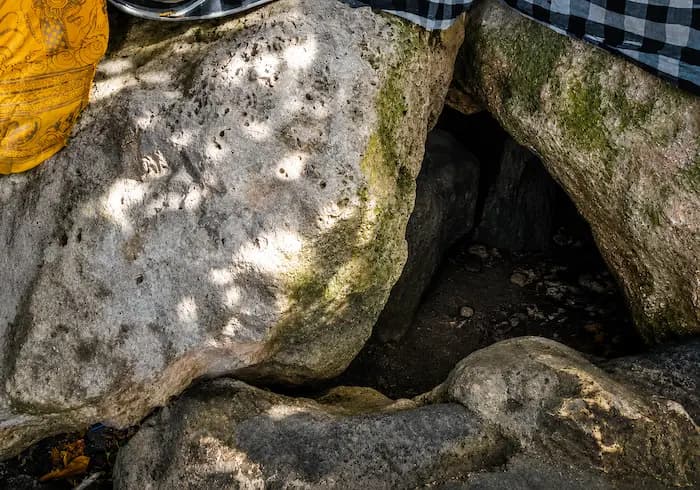
Most temples in Bali are built. Goa Giri Putri was found — a vast natural cave on Nusa Penida's northeast coast, large enough inside to hold an entire community of shrines, reached through an entrance so narrow you have to duck and squeeze through it to get in.
It is one of the most unusual places of worship in Bali, and one of the easiest to miss if you don't know to look for it.
What Goa Giri Putri Is
"Giri" means hill, "Putri" means woman — Goa Giri Putri sits inside a limestone hill on the northeast tip of Nusa Penida, about 30 minutes by road from Toyapakeh. From the outside, there is little to suggest what's inside: a modest entrance set into the hillside, easy to drive past without noticing.
Step through the narrow opening — and narrow is not an exaggeration, you will need to duck down and squeeze through — and the cave opens into a genuinely large interior space. Inside, several separate shrines and prayer areas are spread across the cave, each used for different parts of worship. Stalactites hang from the ceiling above, and the whole space carries the particular hush that comes with being underground and inside a place people still actively use for prayer.
This is not a museum piece or a tourist reconstruction. It's a working temple. Balinese Hindu devotees travel here specifically to pray, and ceremonies happen inside on a regular basis.
Getting In: The Narrow Entrance
The entrance is the first thing every visitor remembers about Goa Giri Putri.
You won't walk in standing upright. The opening requires you to duck down — for most people, it's close to crawling through the first stretch — before the space opens up properly once you're inside. It looks more intimidating from the outside than it actually is; almost everyone gets through without real difficulty, but if you're not expecting it, it can catch you off guard.
Once inside, a flight of stairs leads down toward the main prayer areas. The stone steps are often damp and can be slippery, so take your time and watch your footing — this is not a spot to rush through.

Before You Enter: A Short Purification Ritual
This is not a "look around and leave" kind of temple visit.
Before entering the main cave area, visitors go through a short purification ritual — a standard part of visiting any active Balinese Hindu temple, and a sign of respect for the space you're about to enter. Follow the lead of whoever is guiding you through (a priest or temple attendant is usually present), and treat this part of the visit the way you would any religious ritual: present, attentive, not rushing to get to the photos.
What's Inside
Once you're through the entrance and past the stairs, the cave reveals several distinct shrines and prayer points spread across its interior — not a single altar, but a series of sacred spaces used for different purposes within the temple's worship.
Water flowing through the cave is collected and used as holy water in ceremonies, both here and carried back to Bali for use elsewhere. For devotees, this water is a central part of why this site holds the significance it does.
If you happen to visit on a Balinese Hindu holy day, you may see an active ceremony in progress — priests leading prayers, offerings being made, devotees in white. If this happens during your visit, step back, stay quiet, and watch respectfully rather than treating it as a photo opportunity.
Visiting Respectfully
A few things matter here more than at a typical beach or viewpoint:
Dress appropriately. A sarong is required, the same as any temple in Bali. If you don't have one, they're available to rent on site for around IDR 10,000.
Expect a small entrance fee. Entry is around IDR 50,000 per person — this isn't a donation box situation, it's a fixed cost that goes toward maintaining the temple.
Photography is fine in the general cave areas, but not during active prayer or ceremony. If devotees are mid-ritual at one of the shrines, that is not the moment to be lining up a shot. Use your judgment, and if in doubt, ask.
Move carefully on the stairs. They're stone, often damp, and not lit the way a tourist attraction built for foot traffic would be.
This is a place of active worship, not a backdrop. Goa Giri Putri photographs beautifully, and that's fine — but the people praying around you are not part of the scenery.
Plan Around the Odalan — When the Temple Gets Genuinely Busy
There's a piece of timing most visitors don't think to check before showing up.
Roughly every six months, on the Balinese calendar (a 210-day cycle known as odalan), Goa Giri Putri holds its temple anniversary ceremony — and Hindu devotees travel here from across Bali to take part. For about three days around this date, the cave gets significantly busier than usual. You can still visit and go inside during this period, but expect crowds, queuing for the narrow entrance, and a different atmosphere than the quieter day-to-day visits most tourists experience.
The flow through the cave also changes during this busy period. On a normal, quiet day, you can exit back through the same narrow entrance you came in through. During odalan, with crowds moving through, the temple instead routes visitors out through a separate exit at the far end of the cave, looping back around on foot to the parking area. It's a longer walk out, but it keeps people moving in one direction rather than crossing paths at that narrow entrance.
If your priority is a calm, unhurried visit to take in the cave itself, it's worth checking the odalan dates before you go. If you'd rather witness the temple at its most active — full of devotees, ceremony, and genuine community significance — timing your visit around it is its own kind of experience. Either way, knowing in advance means you won't be caught off guard. Our team can help you check current dates if you're planning a visit.
How to Get There
Goa Giri Putri sits on the northeast side of Nusa Penida, around 30 minutes by road from Toyapakeh. The drive is straightforward on a paved road, doable by scooter or with a driver.
Independent access by scooter is possible if you're a confident rider. For most visitors, going with a driver or as part of a tour is the easier option — partly for the navigation, and partly because having someone who can explain what you're looking at inside genuinely changes the experience.
FAQ
Is Goa Giri Putri difficult to visit? The entrance requires ducking through a narrow opening, and the stairs inside can be slippery, so it does take a bit more physical care than a typical viewpoint. Most visitors of average fitness manage it without real difficulty.
Is there an entrance fee? Yes, around IDR 50,000 per person.
Do I need a sarong? Yes. Sarongs can be rented on site for around IDR 10,000 if you don't bring your own.
Is photography allowed inside the cave? In general areas, yes. During active prayer or ceremony at one of the shrines, no — wait until the ritual finishes or photograph from a respectful distance elsewhere in the cave.
Is there a ritual I need to do before entering? Yes, a short purification ritual is part of the visit, the same as entering any active Balinese Hindu temple. A priest or attendant typically guides visitors through this.
Is there a time when the temple is too crowded to visit comfortably? Roughly every six months, on the Balinese 210-day calendar, Goa Giri Putri holds its temple anniversary (odalan), drawing devotees from across Bali. For about three days around that date, the cave gets noticeably busier — you can still go in, but expect queuing and bigger crowds than a typical visit. Worth checking the dates in advance if you'd prefer a quieter experience, or want to plan around it deliberately.
Can children or elderly visitors go inside? The narrow entrance and uneven, sometimes slippery stairs make this a visit that requires reasonable mobility and a bit of caution. It's not impossible for less mobile visitors, but go slowly and be honest about your own comfort with tight, low spaces.
Final Thoughts
Most people come to Nusa Penida for the cliffs and the water. Goa Giri Putri is something else entirely — a reminder that the island's spiritual life runs just as deep as its coastline, often in places you'd drive straight past without knowing they were there.
If you're curious about the island beyond the viewpoints everyone photographs, this is one of the genuinely different experiences Nusa Penida has to offer.
For more on the island's temples and traditions, see our Nusa Penida Travel Guide. To plan a visit that includes Goa Giri Putri, get in touch or browse our Nusa Penida tour packages.
Want to visit Goa Giri Putri Nusa Penida?
This destination is included in several of our tour packages.