Manta Point Nusa Penida
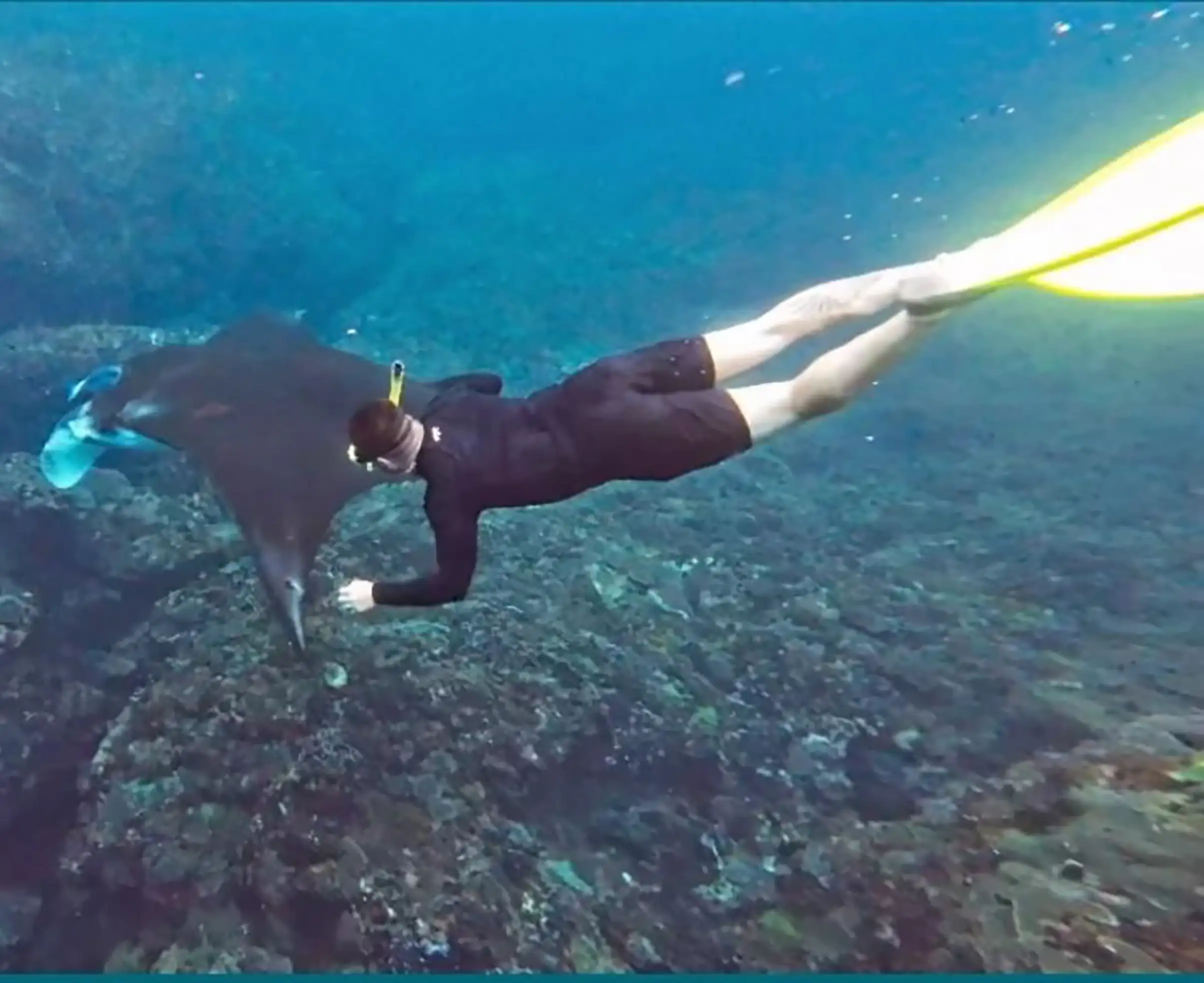
There is a moment that happens to almost everyone at Manta Point.
You roll backward off the boat, adjust your mask, look down — and there they are. Not one. Not two. Several manta rays, each with a wingspan wider than you are tall, gliding silently through the water below you as if you are not there at all. Unhurried. Unbothered. Moving with the kind of slow grace that makes you forget to breathe.
Manta Point is not a place you visit hoping to see manta rays. It is a place where manta rays live — and you are the one who is visiting their home.
That distinction matters. It explains why the sighting rate here is among the highest of any manta ray site in the world. It explains why the mantas here are large, mature, and calm around humans. And it explains why getting here takes longer and costs more than most snorkeling spots around Nusa Penida — because reaching a place this remote, this undisturbed, requires effort.
For most people who make the journey, it is the single best thing they do in Bali.
What Is Manta Point?
Manta Point is a natural cleaning station on the southwestern coast of Nusa Penida, situated in open ocean near the dramatic cliffs below Peguyangan Waterfall. A cleaning station is exactly what it sounds like — a specific location in the ocean where manta rays gather regularly to have parasites removed by small cleaner fish. It is not random. It is not seasonal. The mantas come here because this is where they have always come.
The site consists of two main areas — commonly called Manta Point I (the original site) and Manta Point II (the newer, additional site) — both featuring sandy bottoms, rocky outcrops, and the coral bommies that support the cleaning fish the mantas depend on. The cleaning station begins at just 4 metres below the surface, sloping gradually down to around 25 metres, which makes the site accessible to both snorkelers floating on the surface and scuba divers going deeper.
What makes Manta Point genuinely extraordinary is not just the presence of manta rays — it is the scale of them. The mantas that call this area home are large, fully grown reef manta rays (Mobula alfredi) with wingspans regularly reaching 3 to 5 metres. They are not juveniles passing through. This is their territory. You can feel the difference between a place where animals happen to appear and a place where they belong.
The Boat Journey: A Highlight in Itself
Getting to Manta Point is not a short trip. From Toyapakeh harbour, the journey by boat takes approximately 45 minutes — and that time is not wasted.
The route follows the western coastline of Nusa Penida heading south, and it passes some of the most dramatic coastal scenery on the island — viewed entirely from the water, from an angle that land-based visitors never see.
Along the way you pass:
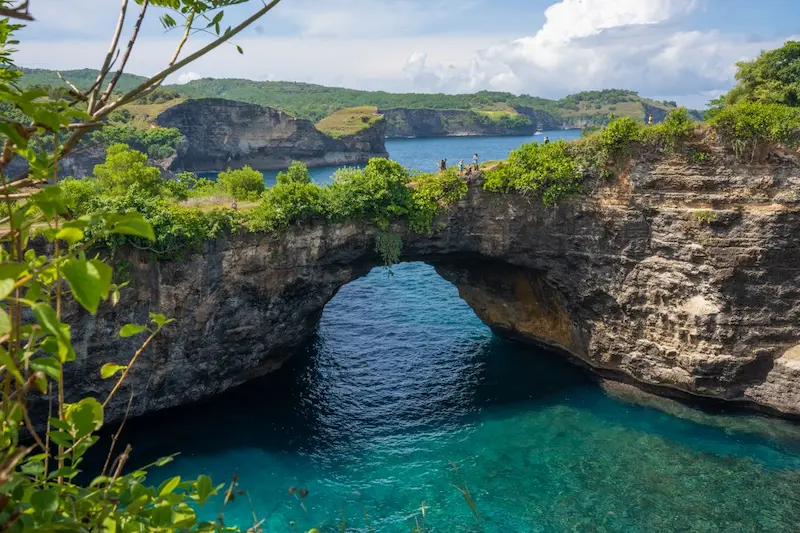
- Broken Beach — the natural arch visible from the water looks completely different from sea level than from the clifftop above
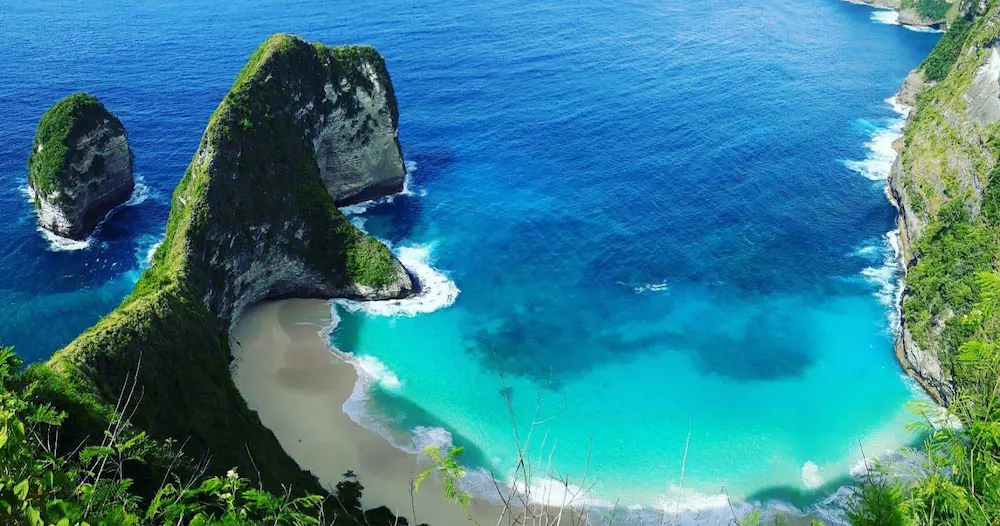
- Kelingking Beach — the T-Rex limestone formation seen from the ocean, towering straight up from the water
- Banah Cliff Point — dramatic sheer cliffs that most visitors only see from above
- Tembeling Beach — the ravine and forest visible from the sea
- Peguyangan area — the open ocean cliffs below the famous waterfall, where Manta Point sits
This 45-minute journey along the southern cliffs of Nusa Penida is a perspective of the island that almost no day-tripper ever experiences. The limestone walls rise straight out of the water for 70 to 100 metres. The scale is completely different from what you see standing on top of them. Many guests find this part of the trip as memorable as the manta encounter itself.
Location
Manta Point is located off the southwestern coast of Nusa Penida, in open ocean near the base of the cliffs below Peguyangan Waterfall.
GPS coordinates (approximate): -8.7954° S, 115.4404° E
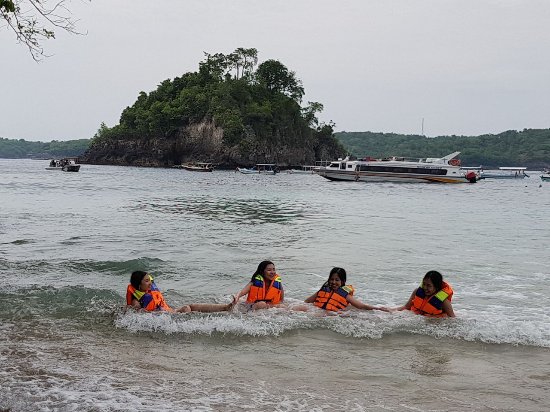
There is no land access to Manta Point. The only way to reach it is by boat — which is exactly why it remains as undisturbed as it does.
How to Get to Manta Point
Option 1 — From Bali (Direct Day Trip)
Fast boat from Sanur harbour to Nusa Penida (30–45 minutes), then continue by local boat to Manta Point (another 45 minutes from Toyapakeh). Most operators offering a Bali-to-Manta-Point day trip handle all logistics — fast boat, land transfer if needed, local snorkeling boat, and guide.
This is the most common option for visitors staying in Bali who want to see Manta Point without an overnight stay on Nusa Penida.
Option 2 — From Nusa Penida
If you are already staying on Nusa Penida, your accommodation or a local tour operator can arrange a direct boat from Toyapakeh harbour to Manta Point. The journey takes approximately 45 minutes.
Option 3 — Combined with West Nusa Penida Tour
The most popular and efficient option. Combine the Manta Point snorkeling session in the morning with a land tour of the West Nusa Penida highlights — Kelingking Beach, Crystal Bay, Broken Beach, and Angel's Billabong — in the afternoon. This is what our West Tour + Private Snorkeling covers.
Local insight: The boat journey to Manta Point passes directly along the base of Kelingking, Broken Beach, Banah Cliff, and Tembeling — all from the water. You will see Nusa Penida's most dramatic coastline from a perspective that land visitors never access. Factor this in when planning your day — it is part of the experience, not just transit time.
Entrance Fee & Practical Information
| Detail | Info |
|---|---|
| Snorkeling tour price | ~IDR 500,000 – 700,000 per person |
| Diving tour price | ~IDR 1.700,000 – 2,500,000 per person |
| Departure time | Typically 07:30 – 08:00 |
| Return time | Typically 11:30 – 12:00 |
| Equipment included | Mask, snorkel, fins, life jacket (snorkeling); full gear (diving) |
| Guide | Always included — non-negotiable at this site |
Manta Point is not a swim-up-and-go attraction. Access requires a local boat, and a guide is essential both for navigation and for ensuring responsible behaviour around the mantas. Budget for the full package rather than looking for the cheapest possible option — quality of boat and guide makes a significant difference at an exposed ocean site like this.
Best Time to Visit
Best Season
Manta rays can be seen year-round at Manta Point, with a success rate of 90 to 95%. This is one of the few manta ray sites in the world where year-round reliability is genuinely accurate rather than marketing language.
That said, conditions vary:
- April to October (dry season): Calmer seas, better water visibility, more comfortable boat journey. The best overall window for most visitors.
- May to October: Peak period for both manta activity and sea clarity. Morning sessions in this period offer the most consistent encounters.
- November to March (wet season): Mantas are still present, but sea conditions can be rougher. On some days, conditions make entry into the water unsafe and the trip has to be cancelled or postponed. Always have a backup plan if visiting in the wet season.
Best Time of Day
Morning, without exception. Depart by 07:30 to 08:00. By mid-morning the site can become crowded with multiple boats, and the mantas — while generally unbothered — are best encountered in the calmer, earlier hours. The earlier you arrive, the better the light for underwater photography and the more space you will have in the water.
What to Expect in the Water
For Snorkelers
The cleaning station begins at just 4 metres deep — close enough to the surface that snorkelers can see the mantas clearly without diving down. You float face-down on the surface and watch as they circle beneath you, sometimes rising to within arm's reach before gliding back down.
The key rules for snorkelers:
- Enter the water quietly and move calmly — sudden splashing or noise disrupts the mantas
- Do not dive down toward them or attempt to touch them
- Keep fins away from coral and rock surfaces
- Follow your guide's positioning instructions — where you float matters
For Divers
The full site experience opens up for scuba divers. A typical dive at Manta Point starts over a sandy seabed before moving toward a series of rocky cleaning stations, where most of the action happens. Manta rays begin to appear quickly — often gliding just above divers, circling slowly in the current, sometimes coming within just a few metres.
Manta Point consists of two main areas — Manta Point I and Manta Point II — both featuring sandy bottoms, rocky outcrops, and coral bommies that attract cleaning fish.
Beyond the mantas, the site regularly produces sightings of reef sharks, bamboo sharks, blue-spotted stingrays, and nurse sharks. On rare and memorable occasions, whale sharks have been encountered here as well.
Recommended certification: Open Water minimum. Some current experience is helpful — the site is exposed and conditions can vary. Always dive with a local guide who knows the site.
The Manta Rays Themselves
Understanding what you are looking at makes the encounter more meaningful.
The mantas at Manta Point are reef manta rays (Mobula alfredi) — the largest species of ray in the world, with wingspans regularly reaching 3 to 5 metres and weights of several hundred kilograms. Despite their size, they are filter feeders — their open mouths scoop plankton from the water, not fish or humans. Manta rays do not have barbs or stingers on their tails and are considered completely safe for humans.
Each manta ray has a unique pattern of black spots on its white underside — like a fingerprint. Researchers use these patterns to identify and track individual animals over years and decades. In Nusa Penida, you may even encounter rare all-black mantas, known as melanistic mantas — an exceptionally rare colour variant that makes an already remarkable encounter unforgettable.
If you are very lucky, you may witness manta ray courtship behaviour — a male following a female in tight formation, sometimes with multiple males in pursuit. It is one of the most remarkable things you can see underwater anywhere in the world.
The mantas return to Manta Point because it is their home. The cleaning stations here have been active for as long as anyone on Nusa Penida can remember. This is not a place where animals are attracted by feeding or bait — it is a natural gathering point that exists entirely on its own terms. That is why the mantas here are so large, so calm, and so consistently present.
Why Manta Point Costs More Than Other Snorkeling Spots
This is a question worth answering honestly, because the price difference is real.
Manta Point is significantly more expensive than snorkeling at Crystal Bay, Gamat Bay, or Toyapakeh Wall. There are three reasons:
Distance: The boat journey from Toyapakeh takes 45 minutes each way — 90 minutes of boat time round trip, using fuel and requiring a capable open-ocean vessel. This is not a short hop to a reef just offshore.
Exposure: Manta Point is an open-ocean site on the southwestern tip of the island, fully exposed to Indian Ocean swell. The boat and the operator need to be equipped for proper ocean conditions — not just calm bay snorkeling.
The encounter itself: The mantas at Manta Point are not small. They are large, mature animals with wingspans that regularly exceed 4 metres. The consistency and quality of the encounter here is genuinely different from anything else available around Nusa Penida. The price reflects that.
When you understand what goes into getting you to Manta Point and back safely, the cost makes sense.
⚠️ Responsible Snorkeling and Diving
Manta Point is a natural site that exists without human intervention. Keeping it that way requires everyone who visits to behave responsibly.
- Do not touch the manta rays. Physical contact disrupts the protective mucus layer on their skin and stresses the animals. Let them approach you — they sometimes will.
- Do not chase or pursue them. If a manta swims away from you, let it go. Chasing causes stress and eventually causes mantas to abandon the site.
- Keep fins off the reef. The coral bommies that support the cleaning fish are essential to the entire ecosystem. Fin kicks that break coral do lasting damage.
- Use reef-safe sunscreen. Chemical sunscreens harm coral and marine life. Switch to mineral-based reef-safe alternatives before any water activity around Nusa Penida.
- Follow your guide. An experienced local guide positions you correctly and manages the group's behaviour in the water. Listen to them.
The manta rays at Manta Point are there because the site has been respected. Every visitor has a responsibility to keep it that way.
What to Bring
- Reef-safe sunscreen (applied well before entering the water)
- Rash guard or wetsuit top (sun protection and warmth — the water can be cooler than expected)
- Waterproof camera or GoPro — this is the one experience where you will genuinely regret not having underwater documentation
- Waterproof bag for your phone and valuables on the boat
- Water and snacks for the boat journey
- Motion sickness medication if you are sensitive — the open-ocean crossing can be bumpy in certain conditions
- Cash for any additional purchases at the harbour
FAQ
Can you snorkel at Manta Point without diving experience? Yes. Manta Point is accessible for snorkelers — the cleaning station starts at just 4 metres depth, well within snorkeling range. No diving experience or certification is needed for the snorkeling option. A guide is always present.
Are manta ray sightings guaranteed? No encounter with wild animals can be guaranteed. However, Manta Point has one of the highest sighting rates of any manta ray site in the world — consistently above 90% year-round. The probability of not seeing a manta ray here is genuinely low.
Is Manta Point suitable for non-swimmers or weak swimmers? Life jackets are provided and mandatory for non-divers. That said, the open-ocean environment and the boat journey can be challenging for people who are very uncomfortable in the water. If you have concerns, discuss them with the tour operator before booking.
How far is Manta Point from the main harbour? Approximately 45 minutes by boat from Toyapakeh harbour on the western side of Nusa Penida.
Can you visit Manta Point and do a land tour on the same day? Yes — and this is actually the most popular option. Snorkel at Manta Point in the morning (07:30 – 11:30), then continue to land attractions in the afternoon. Our West Tour + Private Snorkeling combines both in one efficient day.
What is the difference between Manta Point and Gamat Bay for snorkeling? Manta Point is a dedicated manta ray cleaning station in open ocean — specifically for manta encounters, more remote, and more expensive. Gamat Bay is a calmer, more protected snorkeling site closer to the harbour with good coral and fish life, better for beginners, and more affordable. Both are worth doing — they offer completely different experiences. See our full comparison: [Manta Point vs Gamat Bay].
Is there a specific season for manta rays at Manta Point? Manta rays are present year-round at Manta Point — this is not a seasonal site. Sea conditions vary by season (calmer April to October), but the mantas themselves do not follow a seasonal pattern here.
Final Thoughts
Manta Point is the kind of experience that reframes everything else you thought you knew about marine wildlife encounters. You are not watching mantas in an aquarium, not chasing them on a lucky day at a reef. You are entering a place where these animals have lived for generations — and they let you.
The boat journey alone, hugging the dramatic southern cliffs of Nusa Penida from the water, is worth the trip. What waits at the end of it is something else entirely.
If there is one thing to do in the water around Nusa Penida, this is it.
Book our Nusa Penida Snorkeling Tour for a dedicated snorkeling day, or combine it with the West coast highlights on our West Tour + Private Snorkeling. For a complete overview of everything Nusa Penida offers above and below the water, visit our Nusa Penida Travel Guide.
Questions about snorkeling or diving at Manta Point? Leave a comment below — we answer from direct, on-the-ground experience.
Ready to visit? Book our Nusa Penida Manta Ray Snorkeling Tour for a private, all-inclusive experience.
Want to visit Manta Point Nusa Penida?
This destination is included in several of our tour packages.
First time visiting Nusa Penida? Our complete Nusa Penida travel guide covers everything you need to know — best time to visit, getting there, and top spots not to miss.