Tembeling Beach and Forest Nusa Penida
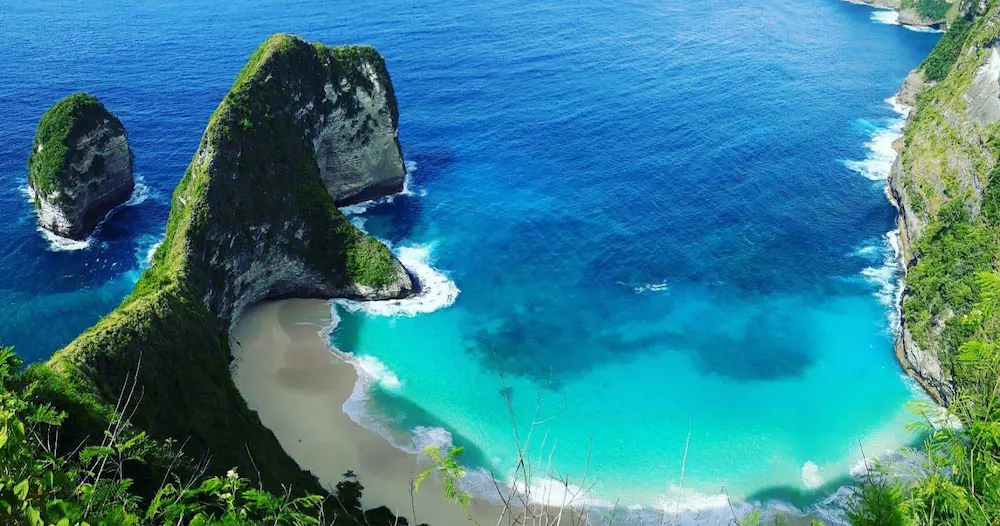
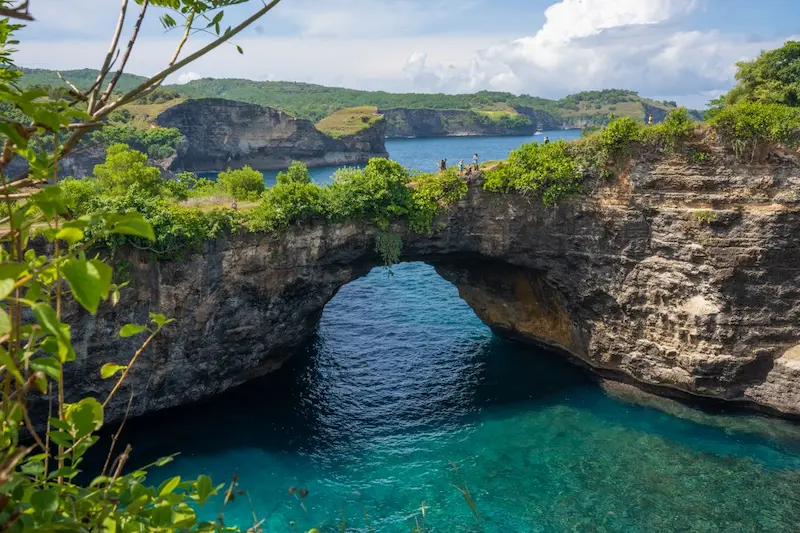
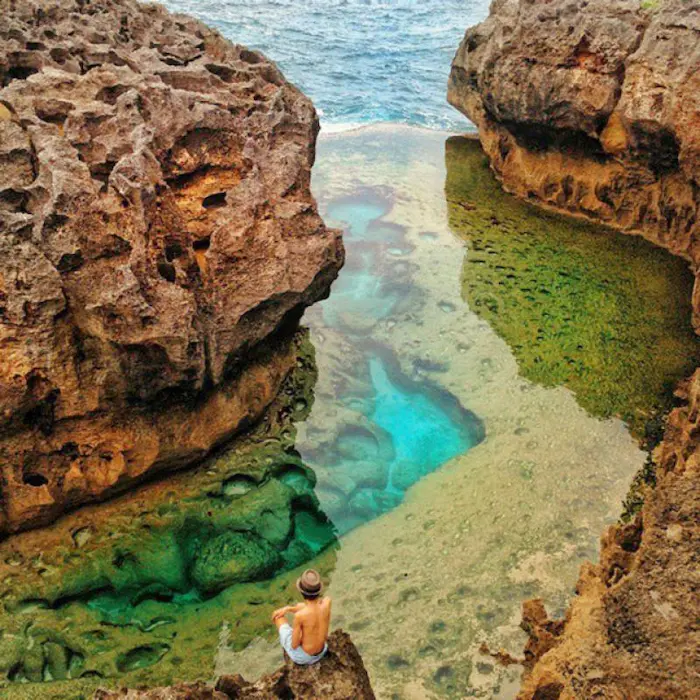
Most Nusa Penida attractions wear their fame visibly. Kelingking has the crowds. Crystal Bay has the beach clubs. Angel's Billabong has the tour groups arriving by 10am.
Tembeling is different — not because it is unmarked or unknown, but because getting there genuinely requires effort. A signboard at the parking area points the way, but no car can take you further. From that point, you walk, or you ride with a local ojek. The descent cuts through primary tropical forest for 25 to 35 minutes before the pools appear.
It sits at the bottom of a steep ravine on the southwestern coast of the island, and that descent is exactly why it still feels like a discovery when you arrive. The pools are fed by an underground spring system that runs through the limestone bedrock — fresh, cold, and remarkably clear. A temple sits at their entrance. A hidden beach lies through a sea cave. And somewhere in between, if you look closely enough, you will find the remains of a natural jacuzzi that locals remember from childhood.
This is the Nusa Penida that existed before Instagram found it. It is still here, still largely intact, and still worth every step of the descent to reach it.
What Is Tembeling?
Tembeling — sometimes spelled Temeling — is not just a beach. It is a complete ecosystem tucked into a coastal ravine: a dense jungle forest trail, two sacred freshwater pools fed by underground springs, a natural jacuzzi platform on the cliff edge, a small white-sand beach, and a hidden rocky cove accessible through a sea cave.
Understanding it as three separate areas helps:
1. The Forest Trail From the parking area, a steep descent of approximately 1.5 km cuts through primary tropical forest. The canopy is thick, the air immediately cooler. Hindu shrines and stone carvings appear along the path. Fresh flower offerings sit at intervals — this trail is actively used for spiritual purposes, not just tourism.
2. The Sacred Freshwater Pools Halfway down the ravine, two natural pools appear carved into the rock — fed by underground springs that run from deep within the limestone cliffs. The water temperature sits around 21 to 24°C — noticeably cool compared to the heat above. The visibility is extraordinary: you can see every rock on the bottom from the surface. Pura Mujaning Temeling, a small Hindu temple, guards the entrance to the pools.
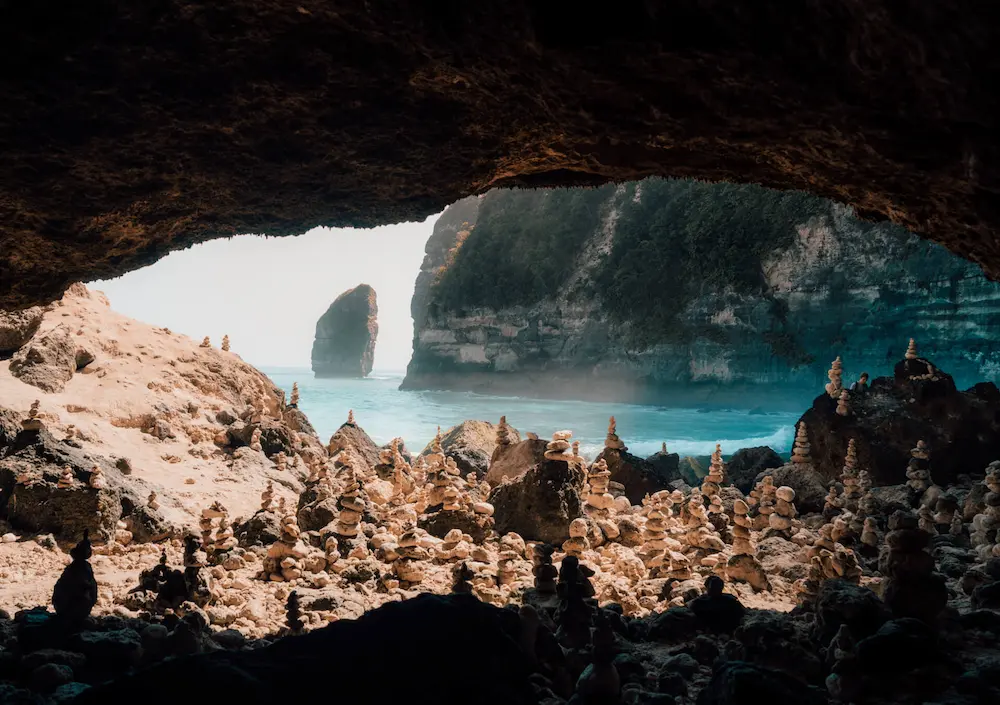
3. The Beach and the Hidden Cove At the base of the ravine, a small white-sand beach opens up, flanked by dramatic limestone cliffs. On the right side of the beach, a sea cave cuts through the rock — passable at low tide — and leads to a second hidden rocky cove on the other side, where visitors have built hundreds of balanced rock towers over the years.
The Story Behind the Name
The Tembeling spring was discovered by a pregnant woman — or so the story goes. According to local oral history, it was this discovery that gave the spring, the pools, and eventually the beach their name. The spring was originally used as a freshwater source by the residents of Desa Batumadeg before it became a place of ritual and, eventually, tourism.
The freshwater that feeds the pools originates from a holy spring deep within the cliffs, associated with the small temple — Pura Mujaning Temeling — located just above the pools. For the Hindu community of Nusa Penida, this is not a tourist attraction that happens to have a temple nearby. It is a sacred site that happens to be beautiful enough that tourists now come.
The Myth That Locals Grew Up Believing
Here is something you will not read in any other travel guide — because it comes from someone who actually grew up on this island.
For generations, local children were told that the larger freshwater pool at Tembeling was connected directly to the sea through an underground channel. The story went that if you dove deep enough, you could swim all the way through to the ocean on the other side.
As a child growing up in Nusa Penida, this was accepted as fact. It was the kind of local knowledge passed down without question — the pool goes all the way through to the sea.
It does not. The spring feeds the pool from above, the water flows down toward the beach, and the limestone beneath is solid. The "tunnel to the sea" is a myth — a genuinely good one, and the kind that only reveals itself when you grow up and think about it properly.
What it tells you about Tembeling: this place has been woven into the imagination of Nusa Penida's people for a very long time. Long before tourists arrived, local children were already treating it as a place of mystery. That feeling has not entirely gone away.
Location
Tembeling Beach and Forest is located in Desa Batumadeg, Banjar Salak, on the southwestern coast of Nusa Penida, Klungkung Regency.
GPS coordinates for parking area: -8.7601° S, 115.4645° E
Distance from harbour:
- From Toyapakeh: approximately 15 km, 35–40 minutes by car
- From Banjar Nyuh (Sampalan): approximately 18 km, 40 minutes
Download an offline map before heading out — signal drops significantly on the south coast road.
How to Get to Tembeling from Bali
Step 1 — Bali to Nusa Penida
Fast boat from Sanur harbour to Nusa Penida. Crossing takes 30 to 45 minutes, boats run from approximately 07:00 to 16:30. Tickets cost IDR 100,000 – 250,000 per person one way.
Step 2 — From the Harbour to Tembeling
Important: Cars cannot access Tembeling. The road leading down to the site is too narrow and steep for tourist vehicles. If you are travelling with a private driver, they will drop you at the parking area at the top and wait there while you descend. From that point, you continue on foot or by local ojek.
Private Driver (Car) — Drop-off at Parking Area
- Cost: IDR 500,000 – 700,000 per day
- Your driver navigates the south coast road and drops you at the Tembeling parking area. They wait at the top while you make the descent — agree on a meeting time before you go down.
Scooter Rental
- Cost: IDR 80,000 – 150,000 per day
- Riders can get closer than cars but the final descent is still too steep and rough to ride safely. Park at the top and continue on foot or ojek.
- If riding yourself: request a Vario 125cc or NMAX, confirm brakes and tyres are in good condition, and tell the rental shop you are going to the south coast.
Step 3 — From the Parking Area to the Pools
A signboard marks the entrance to the Tembeling trail at the parking area — you will see it clearly when you arrive. From there, you have three options:
Walk down (recommended for the experience) The descent takes approximately 25–35 minutes one way. Steep, uneven, and shaded by dense forest canopy. This is the proper way to experience Tembeling — the trail through the jungle is half the attraction. Many visitors specifically choose to walk because the forest descent is part of what makes Tembeling unlike every other stop on the island.
Ojek (local motorbike taxi) Local riders wait near the signboard at the parking area and offer a return ride down the steep track for around IDR 50,000. A good option if you want to save energy for the beach and the sea cave. Note: ojek riders start late and finish early — if you arrive before 07:30 or after 15:00, they may not be available.
Walk one way, ojek the other A practical middle ground — walk down through the forest to fully experience the descent, take the ojek back up when your legs are already tired from the beach.
Entrance Fee & Practical Information
| Detail | Info |
|---|---|
| Entrance fee | 10.000 |
| Parking fee | Donation (IDR 5,000–10,000 suggested) |
| Ojek down and back | ~IDR 100,000 (include entrance fee) |
| Opening hours | No official hours — arrive after sunrise |
| Facilities | Small drink stall near the pools, toilets on the beach |
One of the few genuinely free attractions on Nusa Penida. A small donation at the temple entrance is respectful and expected. Bring cash in small denominations.
Best Time to Visit
Best Season
April to October (dry season) — the trail is drier, safer, and easier to navigate. The pools are at their clearest during this period.
November to March (wet season) — the forest becomes dramatically lush and green, adding atmosphere to the descent. But the trail becomes slippery and the descent significantly more hazardous after rain. Avoid visiting on or immediately after a heavy rain day.
Best Time of Day
- Early morning (06:30 – 09:00): The best window by a significant margin. The light filters through the forest canopy beautifully in the early morning. The pools are empty or nearly so — you may have them entirely to yourself. The cool morning air makes the descent comfortable rather than sweaty.
- Midday (10:00 – 13:00): The most crowded window, and the heat makes the ascent back up genuinely punishing.
- Late afternoon: Possible, but factor in the return ascent — you do not want to be climbing back up in fading light. The path is unlit. Aim to start the ascent back no later than 15:30.
Recommendation: Arrive at the parking area by 07:00. You will have the pools to yourself by 07:30 and be back at the top before the ojek crowd arrives.
Things to Do at Tembeling
Swim in the Sacred Freshwater Pools
The main draw — and worth every step of the descent to reach them. Two pools, fed by underground springs from within the limestone cliffs, sitting in the middle of dense jungle with a small temple at their entrance.
The larger pool is the main swimming area, nestled under the cliff face. The water is cool (21–24°C), startlingly clear, and genuinely refreshing after the humid descent. The smaller pool sits closer to the beach, also spring-fed, calmer and shallower.
On the gender rules: Historically, the larger pool was reserved for men and the smaller for women — a traditional division that reflected the sacred status of the site. This rule is no longer enforced today, and both pools are open to all visitors. The pools are still a sacred site regardless — dress modestly when not in the water and treat the temple area with respect.
Walk the Forest Trail
Do not skip the descent in favour of the ojek. The trail through Tembeling Forest is genuinely special — primary tropical forest, towering canopy, Hindu shrines and stone carvings appearing at intervals, flower offerings placed fresh each morning. The sound of the forest replaces the sound of motorbikes almost immediately after you start walking down.
Hindu shrines and stone carvings appear along the trail, with fresh flower offerings at several points — this is an actively used sacred site, not an abandoned one. The combination of ancient forest and living spiritual practice gives Tembeling an atmosphere that most Nusa Penida stops completely lack.
Find the Hidden Cove Through the Sea Cave
On the right side of the beach, a sea cave cuts through the limestone cliff. At low tide, the cave is passable — you walk or wade through to a completely different cove on the other side. This rocky beach is rougher and more exposed than the main beach, with large cliffs breaking the waves around it.
Over time, hundreds of visitors have built balanced rock towers here. The accumulated effect is strange and beautiful — stacks of limestone in every size, some impossibly delicate, lining the rocky shore. It is impossible to resist adding one of your own.
Important: Only attempt the cave passage at low tide. At high tide, the cave floods. Check tide conditions before you go in, and do not attempt it if the water is surging.
Visit Pura Mujaning Temeling
The small Hindu temple at the entrance to the pools is not a photo opportunity — it is an active place of worship. Locals from Desa Batumadeg and surrounding villages come here for purification rituals during religious festivals.
If you visit, cover your shoulders and wear a sarong around your waist. Do not photograph ceremonies without permission. A small donation at the temple entrance is appropriate and appreciated.
Drink Directly from the Spring
The spring water at Tembeling is clean, clear, and fresh enough to drink directly. This is one of the few places in Nusa Penida where the water coming out of the ground is genuinely potable. Local children have been drinking from it for generations.
⚠️ Safety Notes
The descent is steep. Wear shoes with grip — not sandals. The path is uneven and has loose sections. After rain, it becomes slippery throughout.
The sea cave: Low tide only. Do not attempt at high tide or when waves are surging through the cave entrance.
The beach: The main Tembeling Beach is not safe for swimming in the ocean — waves and currents are strong. Stick to the freshwater pools and tidal pools near the shore.
Ascent timing: The climb back up is harder than the descent, particularly in heat. Start your ascent no later than 15:30 if you want to be back at the parking area before dark. The path is unlit.
No signal: Mobile signal is unreliable or absent throughout the trail. Download offline maps and make sure your driver knows where to wait and when to expect you back.
Photography Tips
- Morning light in the forest: The canopy at Tembeling creates natural diffusion — soft, even light that is ideal for photography. Mid-morning, when sunlight begins to penetrate the gaps in the canopy, creates dramatic shafts of light through the trees.
- The pools: Shoot from slightly above at an angle to capture the depth and clarity of the water. The reflection of the cliff and jungle above is strongest when the surface is undisturbed — arrive early before other swimmers.
- The stone shrine against the jungle: The temple ruins against jungle growth make for compelling images without trying hard.
- The sea cave: Bring a waterproof camera or protect your phone — the cave passage involves wading through water.
- The rock towers: Wide angle captures the accumulated effect of hundreds of balanced stacks along the hidden cove shore.
- Drone: The ravine, forest canopy, and coastal cliffs make this one of the best drone locations on the island for something completely different from the standard Nusa Penida aerial shot. Check local regulations before flying.
West Nusa Penida Itinerary — Including Tembeling
Tembeling works best as either a morning centrepiece or a half-day addition to the West Nusa Penida circuit:
Option A — Tembeling as the main event (half day) 06:30 — Arrive at Tembeling parking area 07:00 – 10:00 — Descend through forest, swim in the pools, explore the hidden cove through the sea cave, ascend back 10:30 — Drive to Crystal Bay (~25 minutes) for a swim and lunch 14:00 — Broken Beach and Angel's Billabong 17:00 — Return to harbour
Option B — Add Tembeling to the standard West circuit 07:00 — Kelingking Beach viewpoint 09:00 — Tembeling Beach and Forest (allow 2.5–3 hours including descent and ascent) 12:30 — Lunch near Crystal Bay 14:00 — Crystal Bay swim 15:30 — Broken Beach + Angel's Billabong 17:30 — Return to harbour
Note: Option B is a full and tiring day. Be realistic about your energy levels for the ascent back from Tembeling if you still have other stops planned afterward.
FAQ
Is Tembeling Beach safe for swimming in the ocean? No. Ocean swimming at Tembeling Beach is not recommended — waves and currents are strong. The freshwater pools are the safe swimming option. Tidal pools near the shoreline are also accessible at low tide.
Is the entrance free? Yes — Tembeling is one of the few free attractions on Nusa Penida. A donation at the temple entrance is respectful and expected. Parking is also donation-based.
How long does the descent take? Approximately 25–35 minutes walking one way. Allow 2.5 to 3 hours total for the full experience — descent, pools, hidden cove, and ascent back up.
Can I take an ojek instead of walking? Yes. Local motorbike taxi riders typically wait at the parking area and offer a return ride down the steep 1.5 km track for around IDR 50,000. They usually start late and finish early — arrive before 07:30 if you want to ride down before the crowds.
Is the freshwater pool still gender-separated? No. The traditional rule separating the larger pool for men and the smaller for women is no longer enforced. Both pools are open to all visitors today.
Can I drink the spring water? Yes — the spring water at Tembeling is clean and fresh enough to drink directly. It has been used as a drinking water source by local residents for generations.
What should I wear to Tembeling? Closed-toe shoes with grip for the descent (not sandals). A sarong or cover-up for the temple area. Swimwear for the pools. Bring a dry bag or waterproof case for your phone if you plan to go through the sea cave.
Is there an ATM or food available? No ATM. A small drink stall operates near the pools selling water and basic snacks. Bring your own food and more water than you think you need.
Final Thoughts
Tembeling is the Nusa Penida that existed before the island became famous. It takes more effort than most stops on the island — a steep descent, uneven path, no facilities, no guardrails — and that effort is exactly why it is still worth going.
The pools are genuinely cold and clear. The forest is genuinely ancient. The temple is genuinely sacred. And the myth of the pool that connects to the sea — the one local children grew up believing for generations — is genuinely false, but somehow makes the place more interesting for knowing it.
Come early. Walk down. Drink from the spring.
For a complete guide to everything Nusa Penida has to offer, visit our Nusa Penida Travel Guide. Or check out our West Nusa Penida Tour to visit Tembeling as part of a full-day itinerary.
Questions about Tembeling or the West Nusa Penida circuit? Drop them in the comments — we answer from direct, on-the-ground experience.
Want to visit Tembeling Beach and Forest Nusa Penida?
This destination is included in several of our tour packages.
First time visiting Nusa Penida? Our complete Nusa Penida travel guide covers everything you need to know — best time to visit, getting there, and top spots not to miss.