Manta Bay Nusa Penida
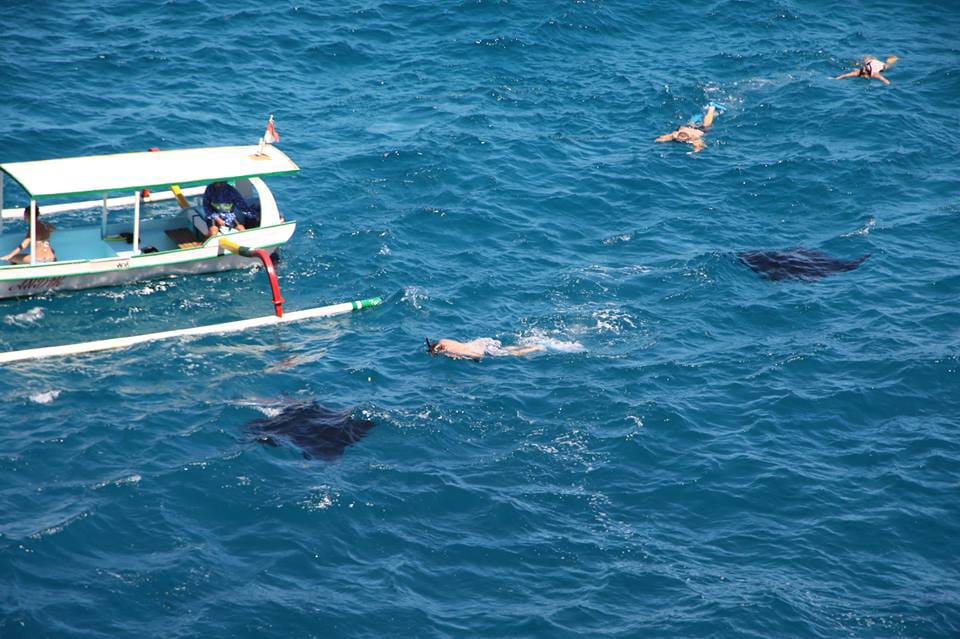
Stand on the clifftop at Broken Beach on a calm morning and look down. Below the arch, in the open water beyond the natural bay, you will see them — dark, flat shapes gliding slowly just beneath the surface. And surrounding them, dozens of boats, each filled with snorkelers floating face-down in the water above.
That is Manta Bay. And you can watch the whole thing from the cliff without getting wet.
But if you want to get in the water yourself — to float directly above a manta ray as it circles beneath you — that is a different experience entirely. This guide covers both: what Manta Bay is, what to honestly expect, and everything you need to know before booking a snorkeling trip here.
What Is Manta Bay?
Manta Bay is an open-water snorkeling site off the western coast of Nusa Penida, located directly in front of Broken Beach and Angel's Billabong. It sits in the stretch of ocean between the dramatic limestone cliffs of the western coastline and the open Indian Ocean.
Unlike Manta Point on the southwest coast — a dedicated cleaning station 45 minutes from the harbour — Manta Bay is accessible in approximately 25 minutes by boat from Toyapakeh. It is the most convenient manta ray snorkeling option on the west side of the island, and the one included in most standard snorkeling tour packages.
Manta rays pass through this area regularly, attracted by the currents and plankton that flow along this stretch of the Nusa Penida coastline. On a calm day with the right conditions, sharing the water with them is one of the most memorable experiences on the island.
The View from Above — Something Most Visitors Never Realise
Here is something that almost no travel article mentions about Manta Bay.
You do not need to be in the water to see the manta rays.
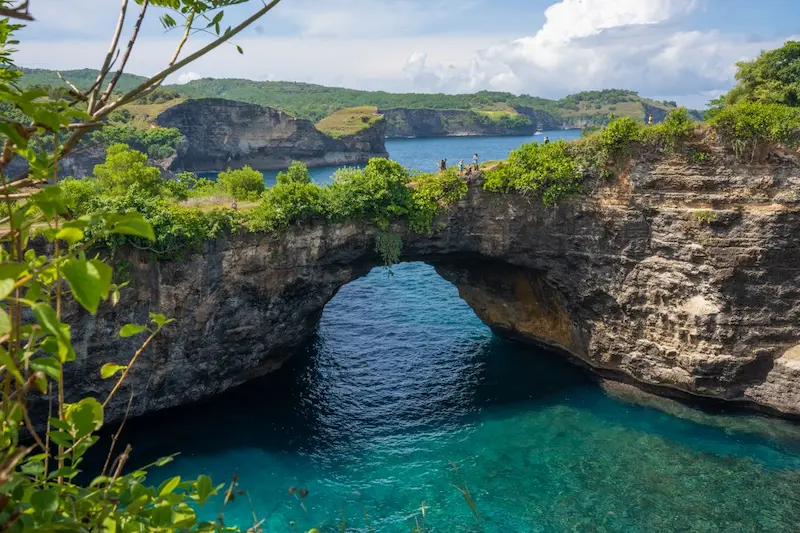
From the clifftop at Broken Beach, standing on the rim above the natural arch, you can look directly down into the water below — and on a clear, calm morning, you will see the mantas from above. Dark, flat silhouettes gliding slowly through the turquoise water, moving with an unhurried grace that is visible even from the clifftop. Surrounding them, on a busy morning, you will count dozens of boats anchored in the bay, each with snorkelers in the water.
It is a remarkable perspective — the dramatic limestone cliffs of the Nusa Penida coastline, the boats below, and the mantas moving through the water between them. Many visitors who come to Broken Beach for the clifftop view end up standing there for far longer than planned, watching the activity in the bay below.
This is the Manta Bay experience that requires zero swimming ability, no boat, and no planning. Just timing — a calm morning, clear water, and a few minutes on the right section of the Broken Beach clifftop.
Location
Manta Bay is located in open ocean directly off the western coast of Nusa Penida, in front of Broken Beach and Angel's Billabong.
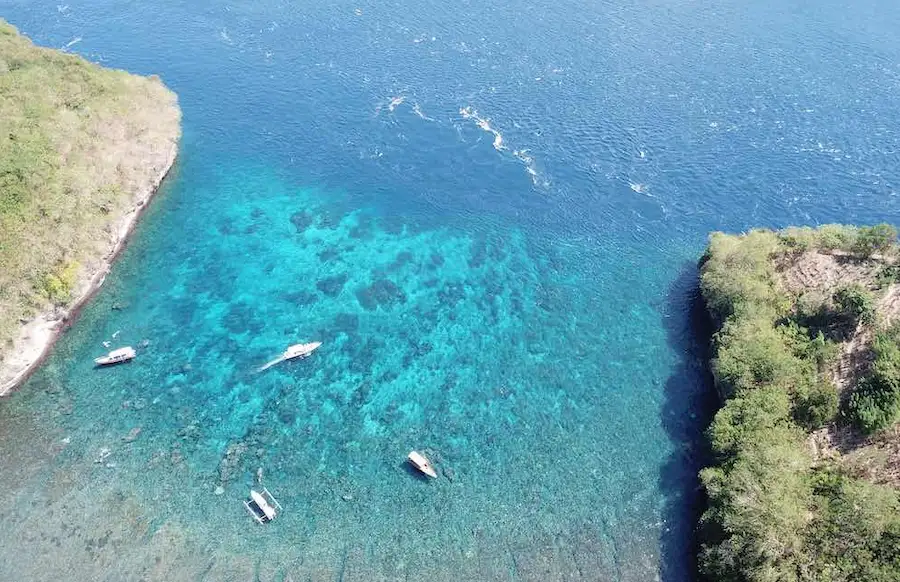
There is no land access to Manta Bay — the water is only reachable by boat. The clifftop at Broken Beach provides the aerial view; the snorkeling experience requires a boat from Toyapakeh harbour.
Distance from Toyapakeh harbour: approximately 25 minutes by boat.
How to Get to Manta Bay
Manta Bay is accessible by boat only.
From Toyapakeh Harbour Most snorkeling tours depart from Toyapakeh in the morning — typically around 07:30 to 08:00 — and reach Manta Bay in approximately 25 minutes. The route follows the western coastline of Nusa Penida, passing Crystal Bay on the way.
Booking options:
- Snorkeling-only tour: Dedicated boat trip to Manta Bay, usually combined with Gamat Bay and Crystal Bay in the same morning session.
- Combined land and sea tour: Snorkeling at Manta Bay in the morning, followed by the West Nusa Penida land circuit — Kelingking Beach, Broken Beach, and Angel's Billabong — in the afternoon. This is the most popular option and what our West Tour + Sharing Snorkeling covers.
Local tip: When you visit Broken Beach on the land tour in the afternoon, walk to the clifftop above the arch and look down at the water. Even after the snorkeling boats have left, you may still see manta rays moving through the bay below. Early morning is the best window for both the boat experience and the clifftop view.
Practical Information
| Detail | Info |
|---|---|
| Access | By boat only — no land access |
| Boat journey from Toyapakeh | ~25 minutes |
| Entrance fee | No entrance fee |
| Snorkeling tour price | ~IDR 400,000 – 600,000 per person |
| Departure time | Typically 07:30 – 08:00 |
| Equipment | Mask, snorkel, fins, life jacket included |
| Guide | Always included |
The Most Important Thing to Know: Conditions Determine Everything
This is where Manta Bay differs most significantly from Manta Point, and it is the piece of information that matters most before you book.
Manta Bay is entirely dependent on sea conditions.
On a calm day — flat water, minimal swell — Manta Bay is an accessible and enjoyable snorkeling experience. When ocean conditions are rough, the site becomes genuinely dangerous. Strong swell from the open Indian Ocean hits this part of the coastline directly, and when the waves are up, no responsible operator will put snorkelers in the water here. This is not a policy decision — it is a safety reality.
What this means in practice:
- Always book with an operator who monitors conditions and will genuinely cancel or redirect if the sea is not safe
- Have a backup plan — if Manta Bay is not diveable on your day, a reputable guide will take you to an alternative site
- Morning is the best window — conditions are typically calmest before midday
- Dry season (April to October) offers the most consistently calm conditions
Best Time to Visit
Best Season
April to October — the dry season offers the most reliable conditions for Manta Bay. Calmer seas, better visibility, more consistent snorkeling windows.
November to March — the wet season brings larger swell to the western coastline. Manta Bay may be unavailable on many days during this period. If visiting in the wet season, always confirm conditions with your operator the morning of your trip.
Best Time of Day
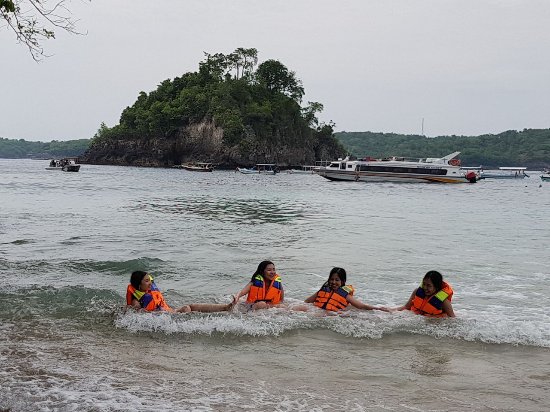
Early morning — 07:30 to 10:00 is the optimal window. Conditions are calmest in the morning before afternoon winds and swell build. On busy days, the bay can have many boats in the water — arriving earlier means more space and calmer conditions.
What to Expect in the Water
Manta Ray Sightings — The Honest Assessment
Manta rays do pass through Manta Bay regularly, but sightings are not guaranteed. This is the key difference from Manta Point.
Manta Point is a permanent cleaning station — the mantas are there because that specific location serves a biological function. They return consistently, day after day, year after year.
Manta Bay is a transit and feeding area. Mantas pass through when conditions bring the plankton they feed on. On some mornings the bay is full of them. On others, there are none. There is no way to predict this in advance.
The mantas at Manta Bay also tend to be smaller than those at Manta Point — younger animals that are still growing, rather than the large, mature adults that inhabit the southwest cleaning station. An encounter here is still a remarkable experience, but the scale is different.
Realistic expectation: You may see manta rays. You may not. Either way, the snorkeling itself — coral, fish life, sea turtles, clear water — is worth the trip.
Marine Life Beyond Manta Rays
When the mantas are not present, Manta Bay still delivers. The western coastline of Nusa Penida sits within the Coral Triangle — one of the most biodiverse marine regions on earth. A typical snorkeling session here produces:
- Tropical reef fish — angelfish, parrotfish, triggerfish, clownfish
- Sea turtles — regular sightings in the calm pockets near the cliffs
- Coral formations along the cliff base
- Occasional reef sharks in deeper sections
For Beginners
Manta Bay is more accessible than Manta Point for beginner snorkelers. The site is closer to shore, the boat journey is shorter, and on calm days the conditions are manageable for those with limited snorkeling experience. Life jackets are always provided.
That said, this is open ocean — not a sheltered bay. First-time snorkelers should stay close to the guide and the boat at all times, and should not attempt Manta Bay if they are uncomfortable in open water.
Manta Bay vs Manta Point — Quick Comparison
| Manta Bay | Manta Point | |
|---|---|---|
| Location | West coast, near Broken Beach | Southwest coast, near Peguyangan |
| Boat journey | ~25 minutes | ~45 minutes |
| Manta sighting | Not guaranteed | 90–95% year-round |
| Manta size | Smaller — younger animals | Large, mature adults |
| Conditions | Weather dependent — rough days = no entry | More sheltered cleaning station |
| Price | Lower | Higher |
| Best for | Budget-conscious visitors, beginners, combining with land tour | Dedicated manta encounter, divers, serious wildlife enthusiasts |
| Viewable from land | Yes — from Broken Beach clifftop | No |
Both sites offer manta ray encounters. They are not the same experience. For a full comparison, see our dedicated article: [Manta Point vs Manta Bay — Which Should You Choose?]
⚠️ Safety Notes
Never snorkel at Manta Bay in rough conditions. The site is fully exposed to Indian Ocean swell. Waves that appear manageable from a boat can create strong surge underwater, making orientation difficult and exit from the water dangerous. If your guide says conditions are not safe, trust them — no manta ray encounter is worth a safety risk.
Stay close to the guide and the boat. Currents in this section of the Nusa Penida coastline can be unpredictable. Do not drift away from the group.
Use reef-safe sunscreen. The coral and marine life along this coastline are part of a protected ecosystem. Chemical sunscreens cause lasting damage to coral reefs. Switch to mineral-based alternatives before any water activity.
What to Bring
- Reef-safe sunscreen
- Rash guard — sun protection and light warmth on the boat
- Waterproof bag or case for phone and valuables
- Underwater camera or GoPro
- Water and light snacks for the boat
- Motion sickness medication if you are sensitive to boat movement
FAQ
Are manta ray sightings guaranteed at Manta Bay? No. Unlike Manta Point which has a permanent cleaning station with near-certain sightings, Manta Bay is a transit and feeding area. Mantas pass through when conditions are right — some days the bay is full of them, some days there are none. A reputable operator will be honest with you about this before you book.
Can you see manta rays from the cliff at Broken Beach? Yes — on calm, clear mornings you can see manta rays from the clifftop at Broken Beach, directly below the natural arch. Their silhouettes are visible from above against the turquoise water. This is one of the most unique wildlife viewing experiences on Nusa Penida, and it requires no swimming at all.
Is Manta Bay suitable for non-swimmers? Life jackets are provided. However, Manta Bay is open ocean — not a sheltered pool. Non-swimmers or those uncomfortable in open water should discuss this with the operator before committing to the snorkeling portion.
How does Manta Bay compare to Manta Point? Manta Bay is closer, cheaper, and more accessible — but manta sightings are not guaranteed and the mantas tend to be smaller. Manta Point is further, more expensive, and has a near-certain sighting rate of large, mature adults. Both are worth doing if you have time. See our full comparison: [Manta Point vs Manta Bay].
Can I visit Manta Bay and do the West Nusa Penida land tour on the same day? Yes — this is the most popular combination. Snorkel at Manta Bay in the morning, then continue to Kelingking Beach, Broken Beach, and Angel's Billabong in the afternoon. Our West Tour + Sharing Snorkeling covers exactly this combination.
What if conditions are bad on the day of my snorkeling tour? A responsible operator will either reschedule, redirect to an alternative site with calmer conditions, or cancel and refund. Always confirm the operator's cancellation and weather policy before booking.
Final Thoughts
Manta Bay offers something that almost no other snorkeling spot in Bali can claim: the possibility of watching manta rays from a dramatic clifftop before you even get in the water.
The snorkeling itself is not guaranteed — conditions and manta presence vary, and honesty about that matters more than a sales pitch. But on a calm morning with the right conditions, floating in open water above a manta ray with the limestone cliffs of Nusa Penida rising behind you is an experience worth having.
Combine it with the West Nusa Penida land tour and you have a complete day — above and below the water, all in one.
Check our West Tour + Sharing Snorkeling for the most efficient way to combine both, or our Nusa Penida Snorkeling Only if the water is your main focus. For everything Nusa Penida has to offer, visit our Nusa Penida Travel Guide.
Questions about snorkeling at Manta Bay or planning your Nusa Penida water activities? Leave a comment below — we answer from direct, on-the-ground experience.
Ready to visit? Book our Nusa Penida Manta Ray Snorkeling Tour for a private, all-inclusive experience.
Want to visit Manta Bay Nusa Penida?
This destination is included in several of our tour packages.
First time visiting Nusa Penida? Our complete Nusa Penida travel guide covers everything you need to know — best time to visit, getting there, and top spots not to miss.