Manta Point vs Manta Bay Nusa Penida: Which One Should You Choose?
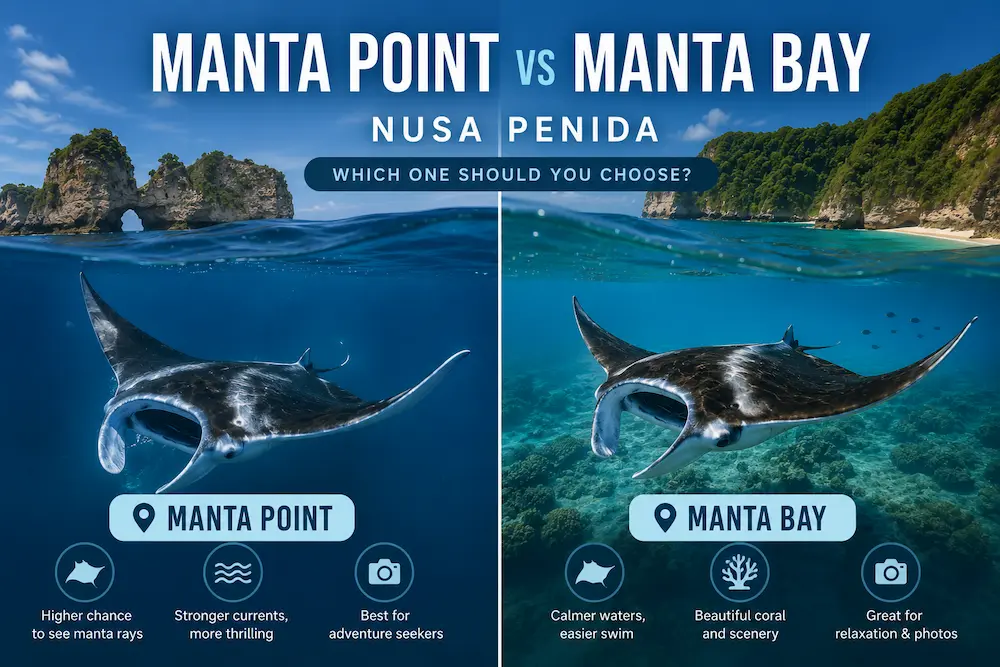
Nusa Penida has two manta ray snorkeling spots — and they are not the same experience. Manta Point is a permanent cleaning station on the southwest coast where large, mature manta rays live year-round, with a sighting rate of around 95%. Manta Bay sits off Broken Beach on the west coast, where mantas pass through on their own terms — spectacular when they show up, with about a 60% chance on calm days. This honest guide from a local team breaks down the difference so you can choose the right one for your trip.
If you are planning a trip to Nusa Penida and manta rays are on your list, you will quickly run into two names: Manta Point and Manta Bay.
They sound similar. They are not the same experience.
One is a permanent home for large, mature manta rays with a near-certain sighting rate. The other is a transit area where mantas pass through on their terms — spectacular when they show up, not guaranteed. The right choice depends entirely on what you are looking for and how much the encounter matters to you.
Here is the honest breakdown from a team based on the island.
The One-Line Answer
Manta Point — if seeing a manta ray is non-negotiable. Manta Bay — if you want mantas as part of a full West Nusa Penida day.
Quick Comparison
| Manta Point | Manta Bay | |
|---|---|---|
| Location | Southwest coast, near Peguyangan | West coast, near Broken Beach |
| Boat journey from Toyapakeh | ~45 minutes | ~25 minutes |
| Manta sighting rate | ~95% year-round | ~60% on calm days |
| Manta size | Large, mature adults (3–5m wingspan) | Smaller, younger animals |
| Sea conditions | Exposed open ocean | Exposed — weather dependent |
| Suitable for beginners | Yes, with guide | Yes, on calm days only |
| Viewable from land | No | Yes — from Broken Beach clifftop |
| Best combined with | Dedicated water day | West land tour |
| Price | Higher | More affordable |
Manta Point — The Manta Ray's Home
Manta Point is not a place where manta rays happen to visit. It is where they live.
Located on the southwest coast of Nusa Penida near Peguyangan, Manta Point is a natural cleaning station — a specific spot in the ocean where manta rays gather regularly to have parasites removed by small cleaner fish. This behaviour has been happening here for generations. The mantas return because this location serves a biological function for them, not because conditions happen to be good on a particular morning.
The result is a sighting rate of approximately 95% year-round — one of the highest of any manta ray site in the world.
The mantas here are large, mature reef manta rays with wingspans regularly reaching 3 to 5 metres. Multiple animals are often present at the same time. The cleaning station begins at just 4 metres depth, within easy reach of snorkelers on the surface.
The boat journey to Manta Point takes about 45 minutes from Toyapakeh — and the route itself is a highlight. The boat follows the dramatic southern coastline of Nusa Penida, passing the base of Kelingking Beach, Broken Beach, Banah Cliff, and Tembeling Beach — all viewed from the water, from an angle that land visitors never see. The limestone walls rise straight out of the ocean for 70 to 100 metres. Many guests find this part of the trip as memorable as the manta encounter itself.
Manta Point is right for you if:
- Seeing a manta ray is the single most important thing on your list
- You want large, mature animals in a calm, unhurried encounter
- You are a scuba diver wanting to explore the full site at depth
- You are happy to dedicate a half-day specifically to the water
- You are willing to pay more for a near-certain experience
Manta Bay — Mantas on Their Own Terms
Manta Bay sits in open water directly off Broken Beach on the west coast — about 25 minutes by boat from Toyapakeh. It is a feeding and transit area where manta rays pass through when the plankton-rich currents along this part of the coastline attract them.
The sighting rate here is approximately 60% on calm days. The mantas tend to be younger and smaller than those at Manta Point — animals still growing rather than the large, fully mature adults of the southwest cleaning station. When they are present, the encounters can be spectacular. On busy mornings, the bay fills with boats and the water is alive with activity. On other mornings, there are none.
One thing Manta Bay offers that Manta Point cannot: you can watch the whole scene from land. Standing on the clifftop at Broken Beach and looking down through the natural arch, you can see the manta silhouettes in the water below and count the snorkeling boats above them. It is one of the most unusual wildlife viewing perspectives on the island — and it requires no swimming, no boat, and no booking.
Like Manta Point, Manta Bay is exposed to Indian Ocean swell. When conditions are rough, the site is not safe and responsible operators will not put snorkelers in the water. Always check conditions on the day and have a backup plan.
Manta Bay is right for you if:
- You want to combine snorkeling with the West land tour — Kelingking, Broken Beach, Angel's Billabong — all in one efficient day
- A 60% chance of seeing mantas is acceptable — you understand it is not guaranteed
- You are on a moderate budget
- You are an intermediate snorkeler comfortable in open water on calm days
The View Nobody Talks About
Here is something almost no travel article mentions about Manta Bay.
When you visit Broken Beach on the land tour — which most West Nusa Penida visitors do — walk to the clifftop above the natural arch and look down at the water below.
On a calm, clear morning, you will see dark flat shapes gliding slowly through the turquoise water. That is Manta Bay. You can watch the manta rays moving below you, and count the snorkeling boats anchored in the bay — all from 70 metres above, completely dry, without booking anything.
It is one of the most surprising moments on the West Nusa Penida circuit, and almost nobody expects it.
What About the Boat Journey?
This is a practical difference that affects your whole day.
Manta Point: 45 minutes each way — 90 minutes of boat time round trip. This is open ocean on the southwest coast of the island. The journey is scenic and memorable, but it is a serious commitment. Combining Manta Point with a full West land tour in a single day makes for a very long day. Most people who visit Manta Point dedicate a half-day specifically to it.
Manta Bay: 25 minutes each way — 50 minutes round trip. Close enough to the main harbour that it fits comfortably into a combined snorkeling and land tour day. This is why most standard West Nusa Penida snorkeling packages use Manta Bay rather than Manta Point.
Which One Should You Book?
Book Manta Point if: You have one chance to see a manta ray and you cannot risk a miss. The 95% sighting rate is the honest answer to "I need to see one."
Book Manta Bay if: You want the West Nusa Penida land highlights and want to add snorkeling in the same day. Accept the 60% manta sighting rate as part of the deal. Check our West Tour + Sharing Snorkeling for this combination.
Book both if: You have two days and the underwater world matters to you. Manta Point on day one for the dedicated encounter. Manta Bay with the land tour on day two. You will have seen both sides of Nusa Penida — above and below the water.
FAQ
Which spot has the higher manta sighting rate? Manta Point — approximately 95% year-round. Manta Bay is around 60% on calm days. The difference comes down to the nature of each site: Manta Point is a permanent cleaning station where mantas live, Manta Bay is a transit area where they pass through.
Are the manta rays bigger at one spot than the other? Yes. Manta Point has large, mature adults with wingspans of 3 to 5 metres. Manta Bay tends to have younger, smaller animals. Both are remarkable to see, but the scale is different.
Can you see manta rays from land? Yes — at Manta Bay. From the clifftop at Broken Beach, you can see manta silhouettes in the water below and watch the snorkeling boats from above. This requires no swimming or booking.
Which is better for beginners? Both are accessible for beginners with a guide and life jacket. Manta Bay on a calm day is slightly more manageable due to the shorter boat journey. Manta Point is open ocean with potential current — still doable for beginners, but go with an experienced guide.
Is Manta Point worth the higher price? If a manta encounter matters to you, yes. The difference between 60% and 95% is meaningful — it is the difference between a likely miss and a near-certain encounter. The higher price reflects the longer journey and the quality and reliability of the experience.
Can I do both in one day? Not comfortably. The 45-minute journey to Manta Point and back makes it a dedicated half-day. Adding a full land tour on top of that makes for an exhausting day. Better to split them across two days if both are on your list.
Final Thoughts
Two spots, two different experiences — both with manta rays as the headline act, but with very different stories behind them.
Manta Point is where the mantas belong. Manta Bay is where they pass through. If you understand that distinction before you book, you will choose the right one for your trip — and you will not be disappointed either way.
For a dedicated manta encounter, book our West Tour + Private Snorkeling. For the combined land and sea day, check our West Tour + Sharing Snorkeling. For a complete overview of everything Nusa Penida offers, visit our Nusa Penida Travel Guide.
Questions about snorkeling in Nusa Penida? Drop them in the comments — we answer from direct, on-the-ground experience.
Related Articles
 Snorkeling & Diving
June 19, 2026
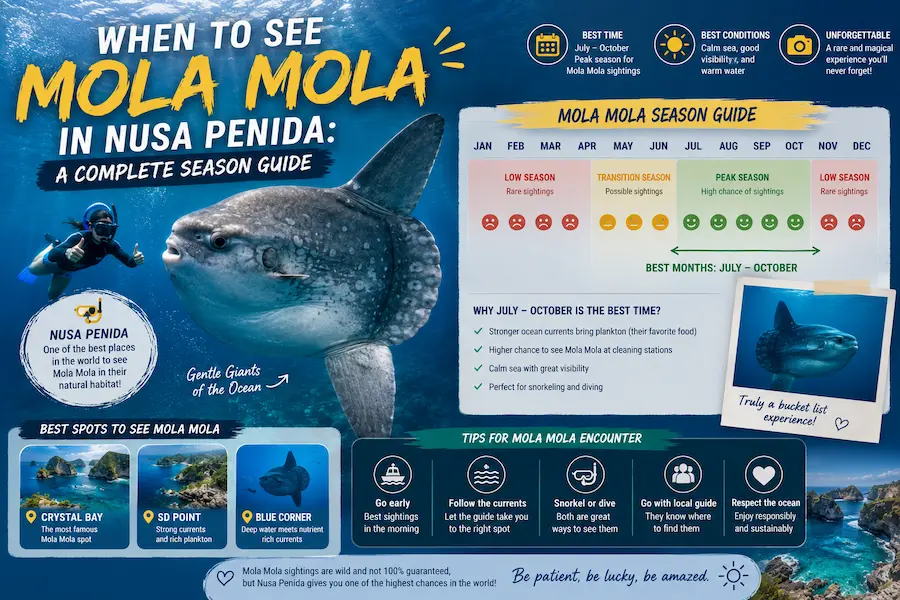
When to See Mola Mola in Nusa Penida: A Complete Season Guide
Nusa Penida is one of the only places on earth where you have a real chance of diving with a Mola Mola in open water. This honest guide covers when to come (June–October), where to look, what certification you need, and the odds most dive marketing won't tell you.
Read more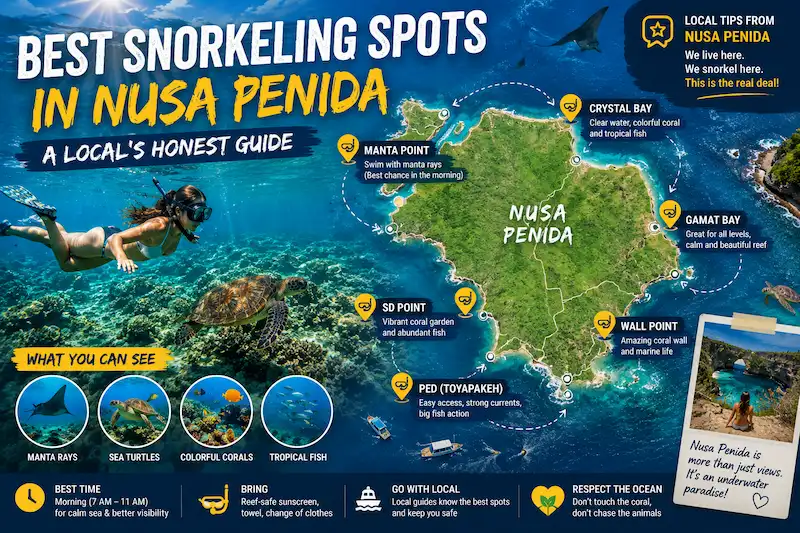 Snorkeling & Diving
June 19, 2026
Best Snorkeling Spots in Nusa Penida: A Local's Honest Guide
Nusa Penida has seven major snorkeling spots, and they are not interchangeable. From the beginner-friendly shallows of Crystal Bay to the 95% manta sighting rate at Manta Point, this honest guide breaks down where to go, what to expect, and which combination actually fits the day you have.
Read more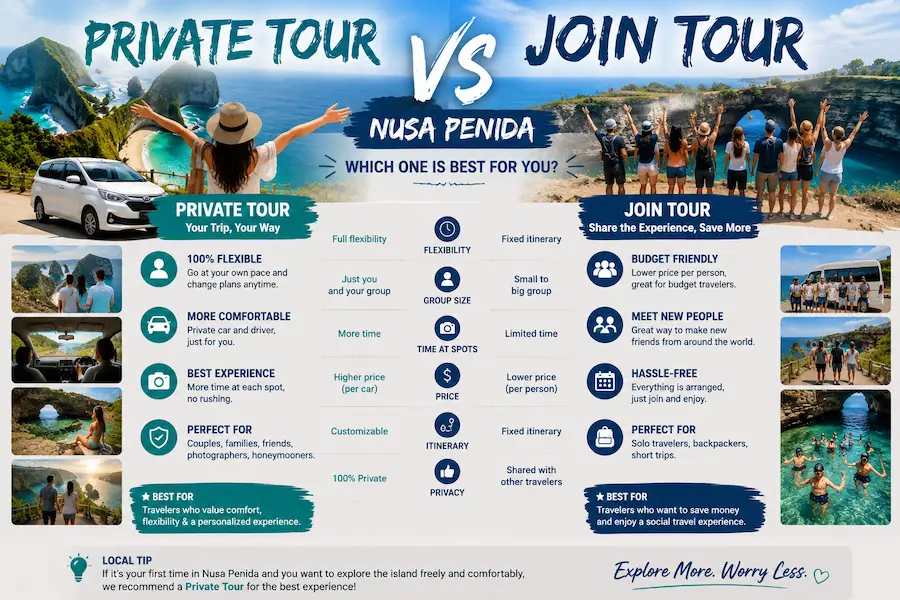 Comparison
June 10, 2026
Private Tour vs Join Tour Nusa Penida: An Honest Guide from a Local Operator
Most travel blogs will tell you: "join tour if you're on a budget, private tour if you want flexibility." That's technically true. But there's a lot more...
Read more