When to See Mola Mola in Nusa Penida: A Complete Season Guide
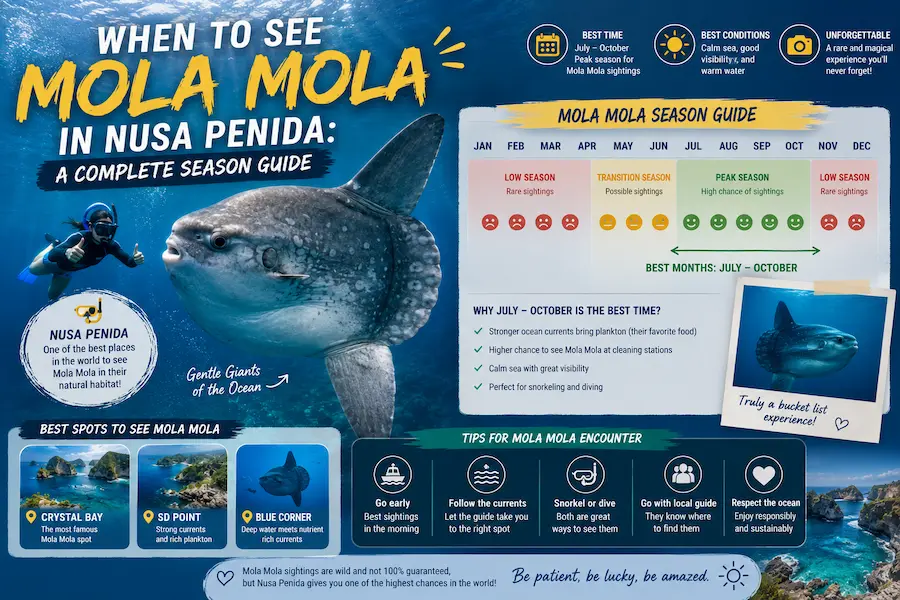
Nusa Penida is one of the only places on earth where you have a real chance of diving with a Mola Mola in open water. This honest guide covers when to come (June–October), where to look, what certification you need, and the odds most dive marketing won't tell you.
There's a reason some divers build their entire Bali trip around a few weeks in the middle of the year: Nusa Penida is one of the only places on earth where you have a real chance of seeing the Mola Mola, the ocean sunfish, in its natural habitat. Not a tank, not a documentary — open water, rising up out of the deep blue like something that shouldn't exist.
This guide covers when to come, where to look, what it actually takes to see one, and the honest odds — because we'd rather you know what you're signing up for than show up expecting a guarantee that doesn't exist.
When Is Mola Mola Season?
Mola Mola season in Nusa Penida runs from June through October. The fish are present in deep water around the island year-round, but they only rise up into diveable depth during this window, when seasonal upwelling pulls cold, nutrient-rich water up from the deep. That cold water is what draws them up to the cleaning stations where divers have a chance of seeing them.
Outside this window, sightings are rare to the point of not being worth planning around. If a Mola Mola encounter is genuinely the reason you're coming to Bali, build your trip around these months.
Where to Look
Crystal Bay is the main site, and the one most divers come specifically to dive. It has a well-established cleaning station where Mola Ramsayi reliably show up during season, and it's the spot every dive operator on the island will mention first.
It's not the only option, though. A handful of other sites around the island — including the area near Ped on the north coast — also see consistent encounters during season, and a good dive operator will know which site is fishing well on a given day based on current conditions and recent reports from other boats.
The Honest Odds
Here's the part most dive marketing glosses over: even in peak season, at the best site on the island, seeing a Mola Mola is not guaranteed. Sightings depend on a combination of factors that shift day to day — water temperature, current, visibility, and a fair amount of luck. Some divers see one on their first dive. Others dive Crystal Bay multiple times across a week and don't get lucky.
We'd rather tell you that upfront than have you show up expecting a sure thing. A Mola Mola encounter is one of the most genuinely special things you can experience underwater in Bali — but it's a wildlife encounter, not a scheduled show.
Do You Need to Be a Certified Diver?
Yes. Mola Mola are found in open water at depth — typically in the 20 to 40 metre range, sometimes shallower later in the season as water warms slightly, but still well beyond snorkeling depth. To dive for them, you need an open water diving certification at minimum, and the deeper, more current-prone parts of Crystal Bay are better suited to divers with Advanced certification.
If you're not yet certified, that's not necessarily the end of the plan — pool training and open water certification courses are available on the island, so it's possible to get certified during your trip if you have enough days to spare. But this isn't something you can decide to try on a whim the morning of; certification takes proper training first.
What to Expect: Cold Water and Strong Current
The same upwelling that brings the Mola Mola up also drops the water temperature noticeably — sometimes sharply, if you hit a thermocline. A proper wetsuit is essential, thicker than what you'd wear for a typical warm-water Bali dive. Current at Crystal Bay can also be strong and occasionally unpredictable, which is part of why this site is better suited to experienced divers.
None of this is meant to discourage you — it's meant to set accurate expectations so you're properly equipped and not caught off guard.
How to Plan a Mola Mola Dive Through Us
We don't run dive trips ourselves — diving for Mola Mola requires a certified dive operator with the right equipment, training, and site knowledge, and that's a different operation from the snorkeling and land tours we run. What we can do is help connect you with a trusted dive center partner on the island so you're not searching blind or booking with an operator you know nothing about.
If snorkeling is more your speed, or you'd rather not commit to a certified dive trip, Crystal Bay is still well worth a visit during these months — the bay itself is beautiful regardless of what swims by, and it's part of our West Tour + Private Snorkeling package. Just know going in that snorkeling does not put you in Mola Mola range — they stay too deep for that.
FAQ
What months can I see Mola Mola in Nusa Penida? June through October, with the best chances generally in the middle of that window. Outside these months, sightings are rare.
Is a Mola Mola sighting guaranteed? No. Even experienced divers at the best sites during peak season sometimes don't see one. It's a genuine wildlife encounter, not a guaranteed show.
Do I need diving certification to see Mola Mola? Yes, an open water certification is the minimum, with Advanced recommended for the deeper, more current-affected parts of Crystal Bay. If you're not certified, courses are available on the island if your trip allows enough time.
Can I see Mola Mola while snorkeling? No. They're found at depths well below snorkeling range — this is a dive-only encounter.
Where is the best place to dive for Mola Mola in Nusa Penida? Crystal Bay is the main and most reliable site, with a few other spots around the island, including near Ped, also producing consistent sightings during season.
Can Melali Nusa Penida arrange a Mola Mola dive trip? We don't operate dive trips directly, but we can help connect you with a trusted partner dive center on the island. Get in touch and we'll help you plan it.
Final Thoughts
A Mola Mola encounter is one of those experiences that's hard to describe properly until you've had it — a fish the size of a small car materialising out of the blue, completely unbothered by your presence. It takes the right season, the right site, a bit of luck, and a properly certified dive — but for the divers who plan their trip around it, it's almost always worth the effort, sighting or not.
For more on Nusa Penida's underwater world beyond Mola Mola season, see our Best Snorkeling Spots in Nusa Penida guide, or our full Nusa Penida Travel Guide for everything else to plan around your trip.
Related Articles
 Snorkeling & Diving
June 19, 2026
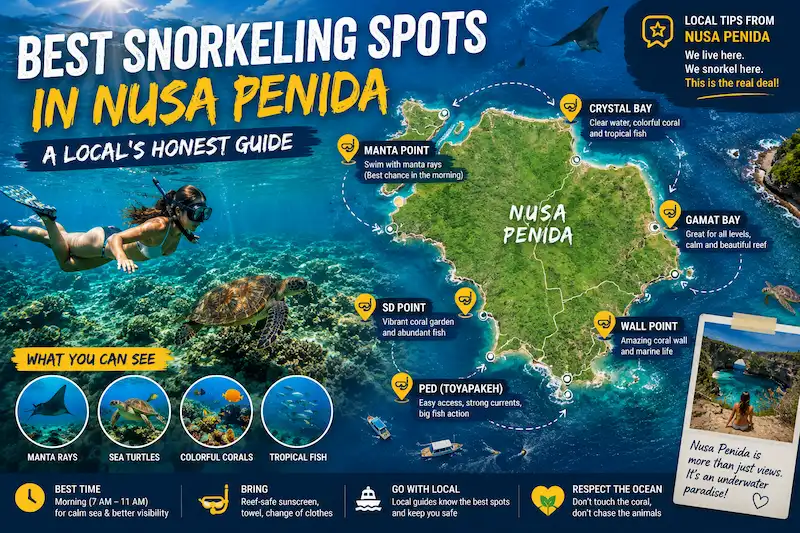
Best Snorkeling Spots in Nusa Penida: A Local's Honest Guide
Nusa Penida has seven major snorkeling spots, and they are not interchangeable. From the beginner-friendly shallows of Crystal Bay to the 95% manta sighting rate at Manta Point, this honest guide breaks down where to go, what to expect, and which combination actually fits the day you have.
Read more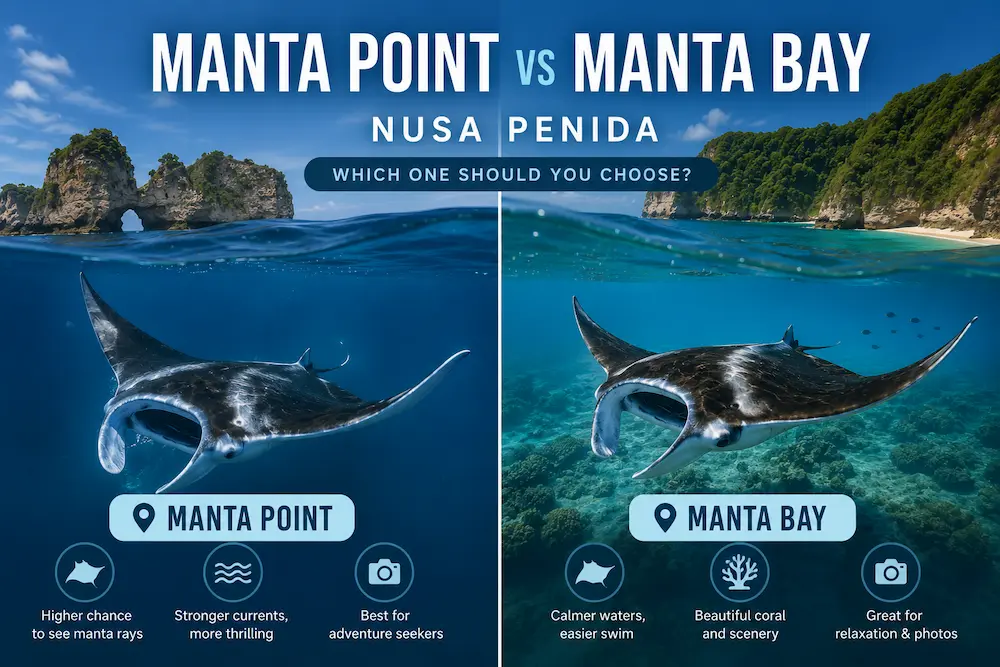 Comparison
June 14, 2026
Manta Point vs Manta Bay Nusa Penida: Which One Should You Choose?
Nusa Penida has two manta ray snorkeling spots — and they are not the same experience. Manta Point is a permanent cleaning station on the southwest coast where large, mature manta rays live year-round, with a sighting rate of around 95%. Manta Bay sits off Broken Beach on the west coast, where mantas pass through on their own terms — spectacular when they show up, with about a 60% chance on calm days. This honest guide from a local team breaks down the difference so you can choose the right one for your trip.
Read more